Pest Management Case Study
Introduction
AgriPest Management have recently been awarded the pest management contract for a large country estate located in North Yorkshire. The large estate consists of around 200 acres of well-maintained gardens and parkland, 350 acres of woodland, 600 acres of farmed arable land as well as a large lake and also a number smaller wild ponds.
Due to the nature of the estate and its natural features, it is a perfect place for wildlife. The lake and ponds are home to a wide range of different wading birds, for example, oyster catchers, snipe and curlew as well as a number of waterfowl species such as mallard, teal, mute swan, as well as graylag and Canada geese.
The woodland areas are abundant with many different species of wild birds such as blackbird, bluetit, coaltit, bullfinch, chaffinch and many more. Pheasant and partridge also frequent this habitat, also a number of birds of prey such as buzzard, sparrowhawk, and tawny and barn owl. Mammals inhabiting the woodland include rabbit, hedgehog, squirrel, fox, and a healthy population of roe deer.
The estates parkland and gardens are home to a variety of different mammals. We have observed a very healthy population of brown hares, as well as a large and well-established population of rabbits. The grassland areas are also surveyed from above by a population of red kites who pick up any carrion in the area.
Rabbit control
The first time AgriPest surveyed the estate, it was clear that the population of rabbits urgently needed controlling due to the vast amount of damage they have caused in the parkland and the grounds of the estate. We observed a large amount of well-established rabbit warrens in a variety of areas throughout the estate and it was evident that the population had not been properly managed for some time. Aside from the burrowing damage caused by the rabbits excavating their warrens, they had also been inflicting damage in other areas. They had damaged many plants and saplings around the property, as well as digging up hundreds of recently planted bulbs in various areas around the estates grounds, resulting in hundreds, if not thousands of pounds worth of damage.
After hearing of the damage the rabbits had caused and then seeing it for ourselves, we knew rabbit control had to be a priority of pest management at the Hall. We decided it would first be a good idea to come at night with the thermal scopes on the rifles to get an idea of the numbers of rabbits we were dealing with.It can be difficult to gain an accurate idea of numbers during the day as the rabbits are more likely to be down their warrens, especially with the amount of human activity that is going on at the estate during the day.
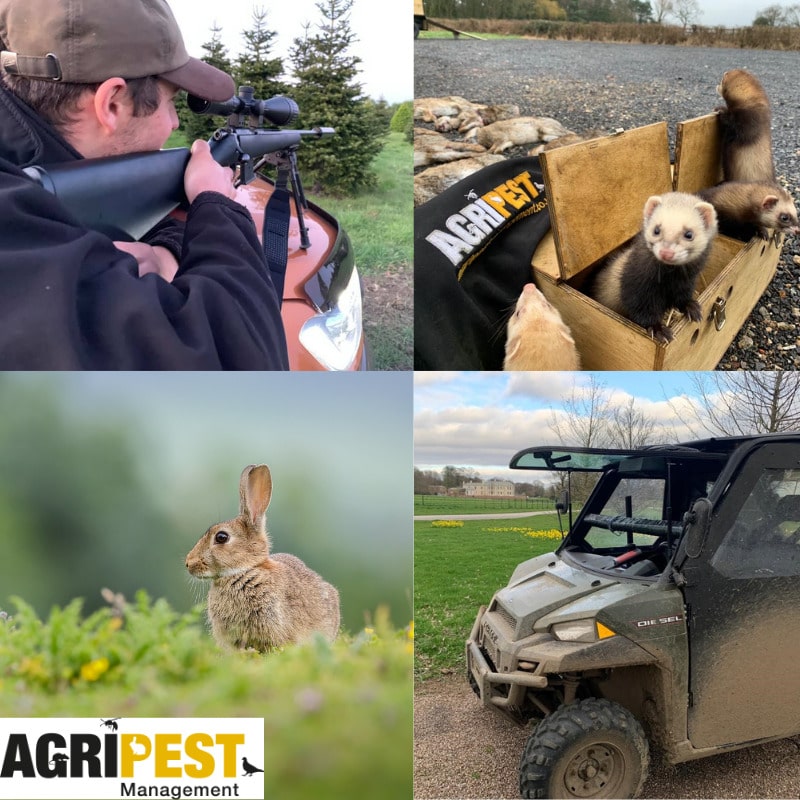
After 17:00pm the other estate workers, such as the groundskeepers and gardeners would have finished for the day, the grounds of the estate would be completely empty and a lot quieter. This would be the most effective and safest time for us to head out with the rifles and discover what levels of numbers of rabbits we were dealing with. The first evening we arrived at the estate just after 17:00pm and set out in the Polaris (an all-terrain vehicle) looking for rabbits. We decided to take the 22LR rifle with a moderator, shooting sub-sonic ammunition to keep noise as low as possible. We also took a red lamp for shooting after dark, as this would be less likely to spook the rabbits, however we also took night vision with us just in case some of the rabbits happened to be lamp shy.
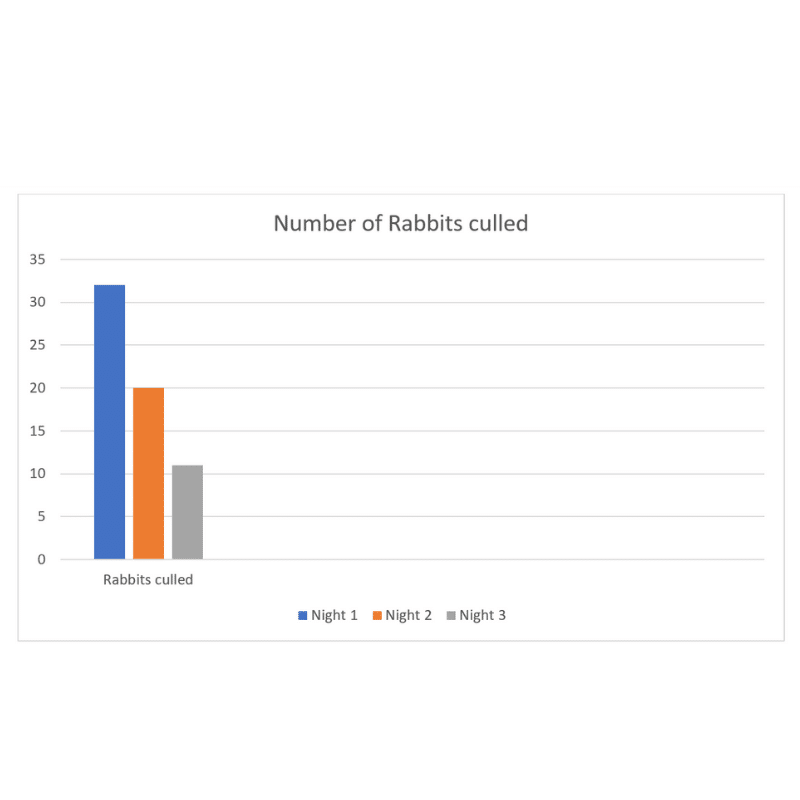
On the first night we observed a substantial amount of rabbits. We managed to shoot a total of 32 rabbits which we were happy with for the first visit. It was a good start and a reduction in their numbers. It gave us an insight into the number of rabbits we were dealing with, and although shooting 32 rabbits would have had an impact on their numbers, we knew there was still a lot more to go at, so we planned to return a few nights later to try again.
Once a few days had passed, we returned to the estate for another shoot and to cull some more rabbits. Upon arrival we soon realized that weather conditions were not in our favour as it was windy. This is not ideal for shooting rim fire rifles as the accuracy of the rifles can be deteriorated by the wind. Taking this into account, we knew that we would more than likely have to get a little bit closer to the rabbits to make our shots more accurate in the wind. This time we noticed a decrease in the amount of rabbits we were seeing, however we still saw a substantial amount and managed to cull another 20 rabbits with the rifle, taking our total up to 52 rabbits for the two visits.
After the second visit shooting rabbits, we observed that there had been a huge decrease in the numbers we were seeing both in the day and at night which we were happy with. However we were still seeing more than we would like so we decided to give the rabbits a break for a week and return the week after for another look out with the rifle to see if we could cull anymore. This time it was more difficult as the rabbits were now few and far between, however we managed to shoot another 11 rabbits increasing our total up to 63 rabbits culled over 3 visits.
Grey squirrel control
As well as completing rabbit control on the estate, AgriPest were also asked to monitor and control the number of grey squirrels in the area. The population had grown quite large due to not being controlled previously. The squirrels had been causing a lot of damage in certain areas around the estate. They had damaged several trees, as well as digging up newly planted bulbs in the parkland and gardens. Grey squirrels are an invasive species that should be controlled wherever possible. Initially, we had a ride around the estate and noted down the areas where we had seen squirrel damage, and also areas where we had spotted squirrels moving around. We also noted down where we had seen squirrel dreys.
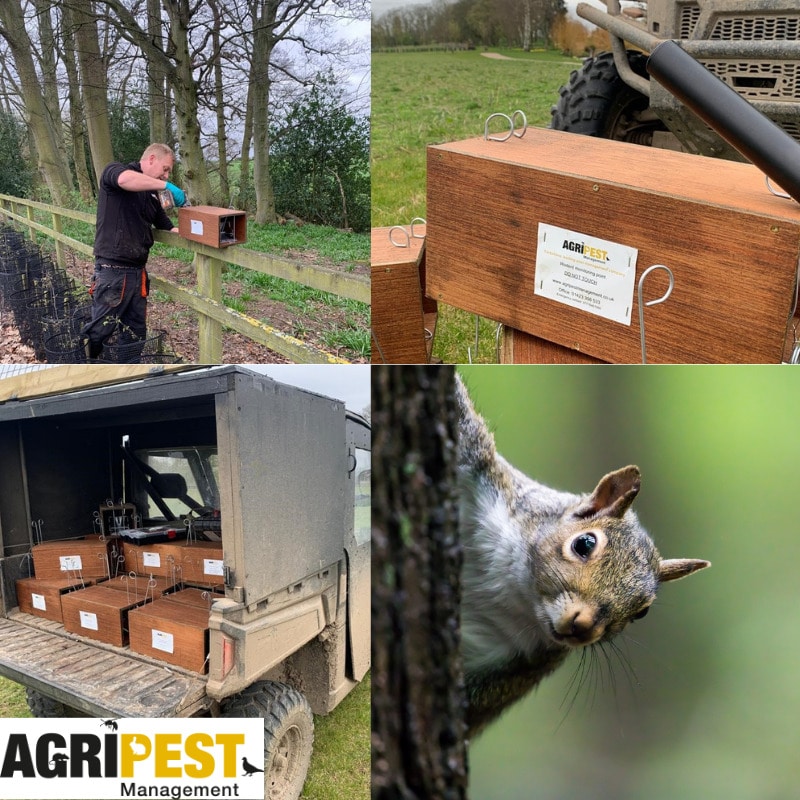
Next, we put together some squirrel trapping boxes, starting with 20 boxes as we decided that was an adequate number of traps to start with for the areas we were going to trap. We could always add more, or reduce the number of traps if necessary. The squirrel trapping boxes we built are very simple, we made them from a tough, weather resistant timber. They are essentially a rectangular tunnel just large enough for a squirrel to get through. On either end of the tunnel, we installed two metal pegs, these are designed to deter and prevent non-target species such as birds from entering the trapping boxes, as the space at either side of the pegs only allow something the shape and size of a squirrel to squeeze through. The traps we used in the trapping boxes are Mk 6 Fenn traps, we favour these because of their simplicity to operate and also their longevity, they will last a long time! They are humane traps if used correctly, and most of the time will kill a squirrel instantly. We attach these traps to the boxes with a short length of metal wire to stop the traps from being pulled out of the trapping boxes (the metal pegs also stop the traps from being dislodged from the boxes).
Even with the use of these specialist squirrel trapping boxes, there is always a risk of trapping non-target species. It is important to minimise the risk by only using them in certain areas where they can be installed up off the ground where squirrels can still access, such as on top of fencing or on tree limbs etc. We never install trapping boxes at ground level as this increases the possibility of trapping a non-target species such as hedgehogs, stoats etc. It is also important to note that spring traps (instant kill) should only be used in areas where red squirrels are not present. Red squirrels are endangered and protected and as such means that killing them is illegal and could lead to you being prosecuted for wildlife crime. If you are in an area with a population of red squirrels, but you wish to control grey squirrels, then you would have to use live catch traps only. On the estate where we are trapping, we know for certain that there are no red squirrels present so we are able to safely use spring traps.
Once we had constructed the 20 squirrel trapping boxes that we required, we set out around the estate and began to install them in various areas where we had recently seen grey squirrel activity. There is a large amount of wooden fencing bordering woodland around the estate which we decided would be perfect for installing the trapping boxes. We had seen squirrels traveling along this fencing, so the majority of the trapping boxes were installed on the fence line with the use of strong screws. As well as utilising the fencing to install our traps on, we also found some tree limbs that were at the perfect height to install our trapping boxes. Squirrel activity had also been observed within these trees so it was also a perfect place to have some traps.
In these circumstances, we opted not to bait the traps as it could potentially encourage non-target species into the traps and we didn’t want to risk killing anything other than the targeted grey squirrels. Squirrels are incredibly curious creatures by nature who can’t help but want to go through tunnels. They will investigate trapping boxes without having to bait the traps, and we have had great results previously without baiting, so it seemed like a safer way of trapping.
Once we had got all of our squirrel boxes set out, we decided to carry out some “drey poking” on the squirrel dreys we had previously seen. Drey poking involves the use of a shotgun and a long pole and can be an incredibly effective way of handling grey squirrels. It is essentially just as the term suggests, using a pole long enough to reach the squirrels drey. You then poke the pole into the drey, causing the squirrel to bolt, this gives you a chance to shoot it with the use of a shotgun. Squirrel dreys can be easily identified if you know what you are looking for. They are a spherical structure made from twigs and other debris which are found up in the limbs of trees, squirrels use these dreys to live in and rear their young. It is important that you know what you are looking for when carrying out drey poking as you need to be certain that you are poking a squirrel drey and not a birds nest.
When we carried out the drey poking, we chose to use a pump action 410 hushpower shotgun to reduce noise levels as 12 bore shotguns are loud. Quite a few of the dreys we came across were already empty, however we did manage to locate some active dreys and shot 8 squirrels from the dreys we had found.
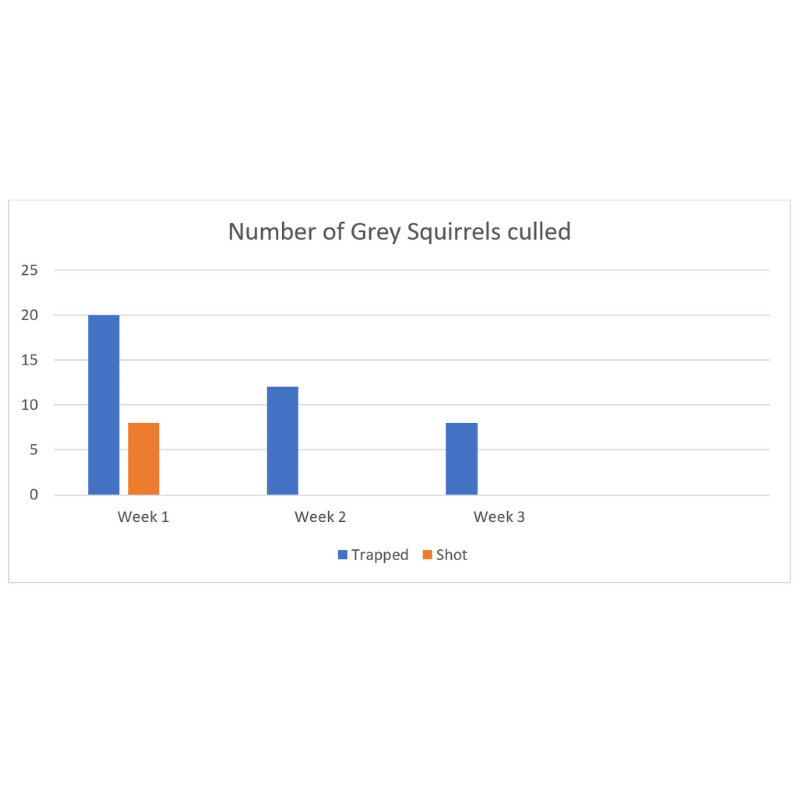
After the first week of trapping, we managed to trap 20 squirrels in the trapping boxes as well as shooting 8, making our total for the week 28 squirrels dealt with, and this was a great start.
After the second week of trapping, we had caught and dispatched another 12 squirrels in the trapping boxes alone, and after the third week of trapping, we had trapped and dispatched a further 8 squirrels.
Canada goose management
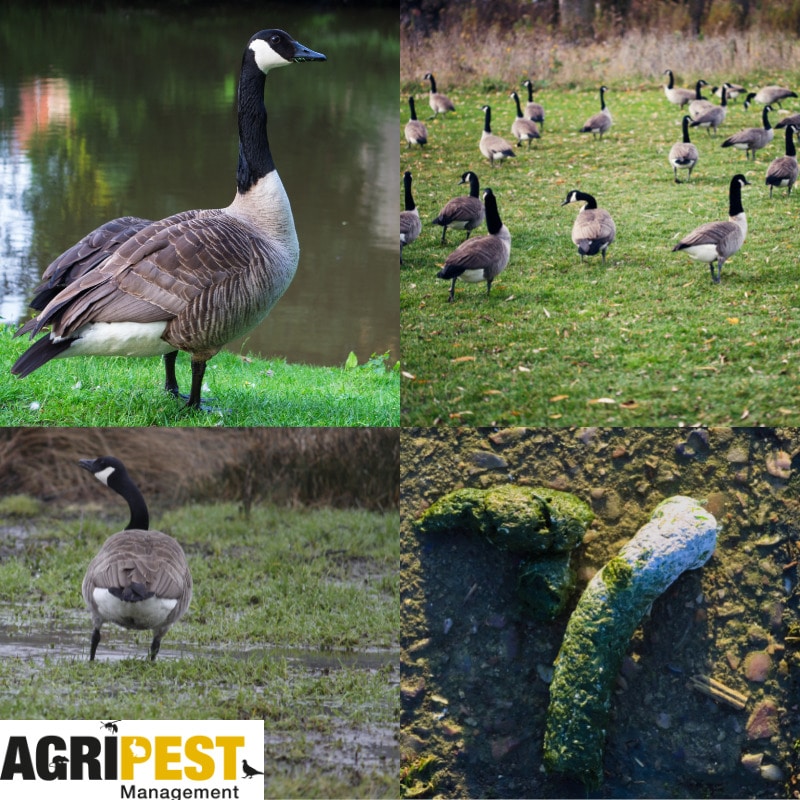
The main lake on the estate is home to a variety of wild birds including many Canada geese which are non-native to the UK. Canada geese are large birds which can leave a vast amount of droppings behind them, resulting in environmental contamination. Due to the high number of these birds being present on the lake, the large amount of droppings they were leaving was starting to cause lake pollution. It was also making a mess of the land surrounding the lake, posing a risk to public health. For these reasons we were asked to control the number of geese around the lake.
Before going straight in and shooting the geese, we decided to try scaring the geese away from the lake to try to move them on. We did not want to have to use lethal methods of control, however these geese were accustomed to the presence of people and scaring them off only proved to be a short term measure as they would simply fly off and circle the area for a bit, before landing straight back on the lake and continuing as they were before.
We came to the decision that the only effective way of lowering the numbers of Canada geese on the lake would be shooting. This would be done legally under the general license, with the use of steel shot so as not to contaminate the environment.
We were successful with the shooting of the geese and managed to humanely dispatch 8 adult geese from the lake. This had a huge impact as not only had we removed some of the geese, but now the other geese were extremely wary as to what was going on. They moved on from the lake and we have not seen many since other than the odd one or two which is a great result.
Rook control
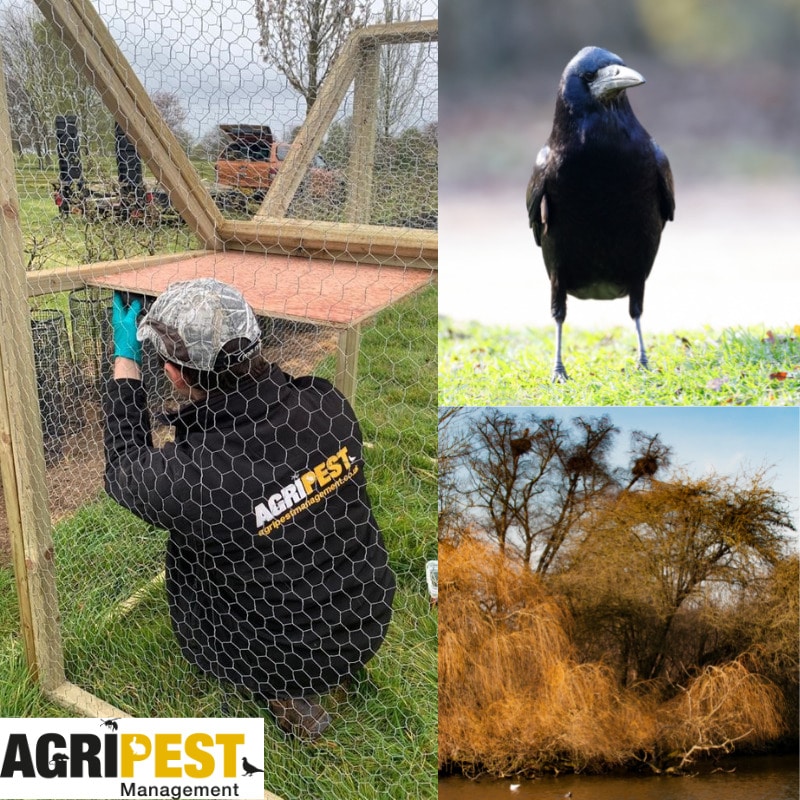
The estate woodland has a large rookery within the canopy of some of its trees which grows year on year. These rooks were becoming a nuisance on the estates arable land, causing crop damage due to the amounts of rooks that are active in the area. We were asked if we could help to manage the number of rooks in the area to reduce the amount of crop damage that was happening.
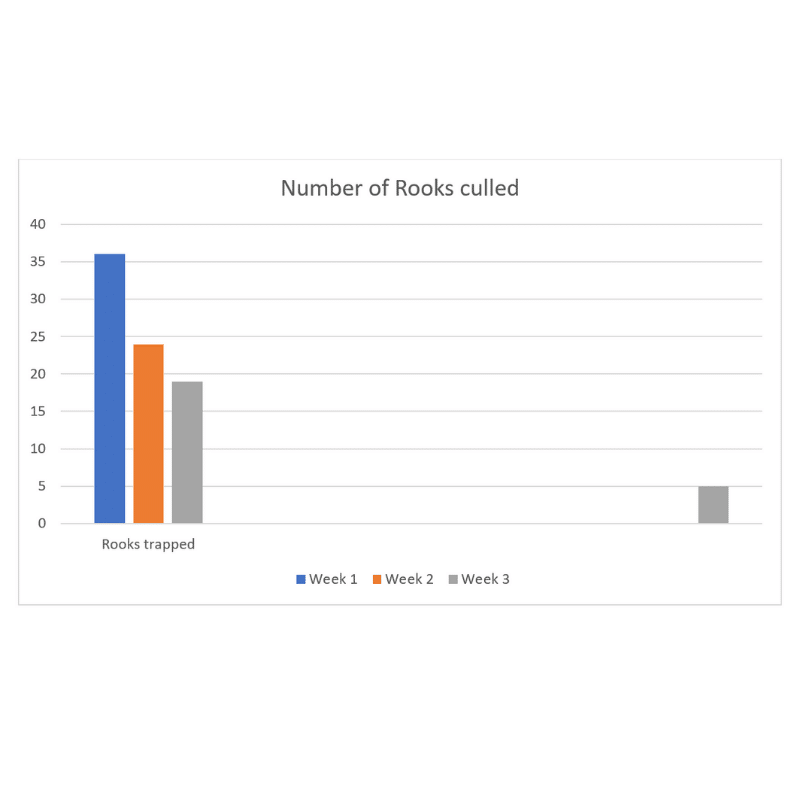
Shooting wasn’t really an option due to the fact that the rookery was reasonably close to a road, so we decided trapping was the only option. We had previously had good results elsewhere, trapping rooks with the use of a ladder trap. We decided to set up a few ladder traps in the areas where the most crop damage was occurring. Ladder traps are very effective at catching rooks as you can trap large numbers over a short period of time, as well as having the ability to dispatch the birds easily and humanely within the trap. After the first week of trapping with the ladder traps we had caught and culled 36 rooks which was a great start. By the end of the second week we had trapped and culled a further 24 rooks, and by the third week we had trapped and culled another 19 rooks, taking our total to 79 rooks trapped and humanely dispatched over a three week period. This made a huge impact on the number of rooks in the area and helped to reduce the amount of crop damage which was being caused.
Deer management
The estate has a population of roe deer that inhabit its grounds, and like anything else, good management is required to ensure that the population remains healthy and that the numbers of deer don’t overpopulate the area. This is when they can start to cause damage to crops and saplings.
AgriPest was asked to manage the deer population on the estate. Deer numbers had grown quite large due to no previous deer management being carried out. The deer had started to spread throughout the estate and damage had been observer on a number of the sapling trees that had recently been planted. The deer had nipped the tops off the saplings, killing or stunting the saplings growth.
Initially we did a deer count, we recorded all of the deer that we saw whilst travelling around the estate. We recorded the number we saw, where we had seen them and whether they were bucks or does. We also noted their physical condition, so that we could monitor how they were doing, any deer that were in poor condition would be potential deer to be added to the cull list.
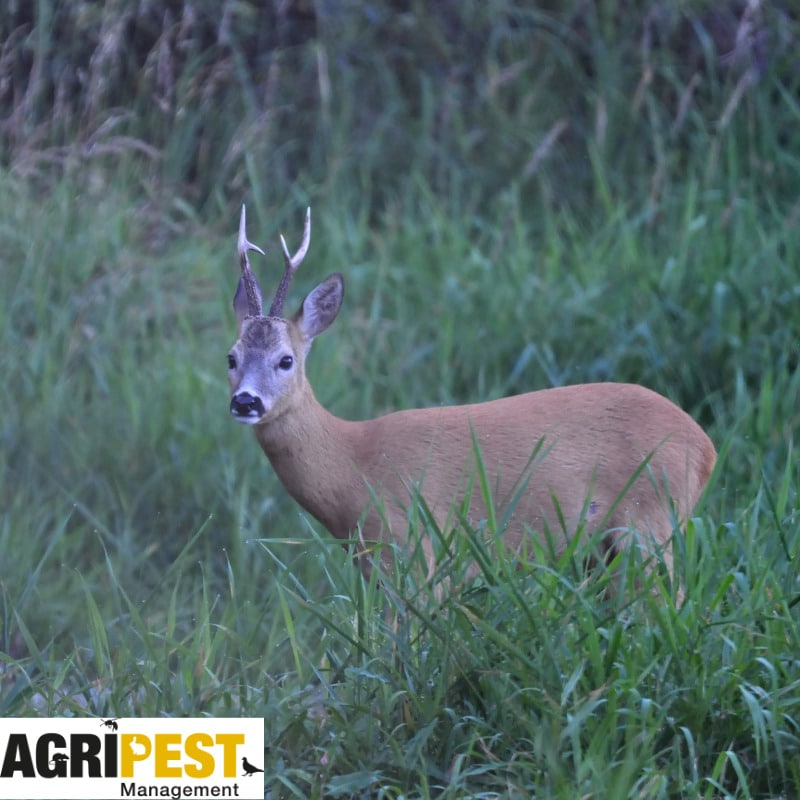
Due to the time of year, we were mainly focusing on the roe bucks, they were the ones in season that were legal to cull. We identified several bucks and decided that they were bucks we were going to cull. One of the bucks we culled was malformed, which means that his antlers had grown in an abnormal way. This could potentially be a threat to other bucks during rutting.
Another buck we culled was in poor condition. He looked as though he had experienced an extremely tough winter. He was very skinny so it was decided to cull him, as we were worried that he wouldn’t put on enough body weight for rutting. Roe bucks use a large amount of energy during rutting which could have killed him anyway. We had also decided to cull several yearling bucks to help reduce the numbers of deer, we knew there was already an established population of mature bucks in the area for breeding.
Mole control
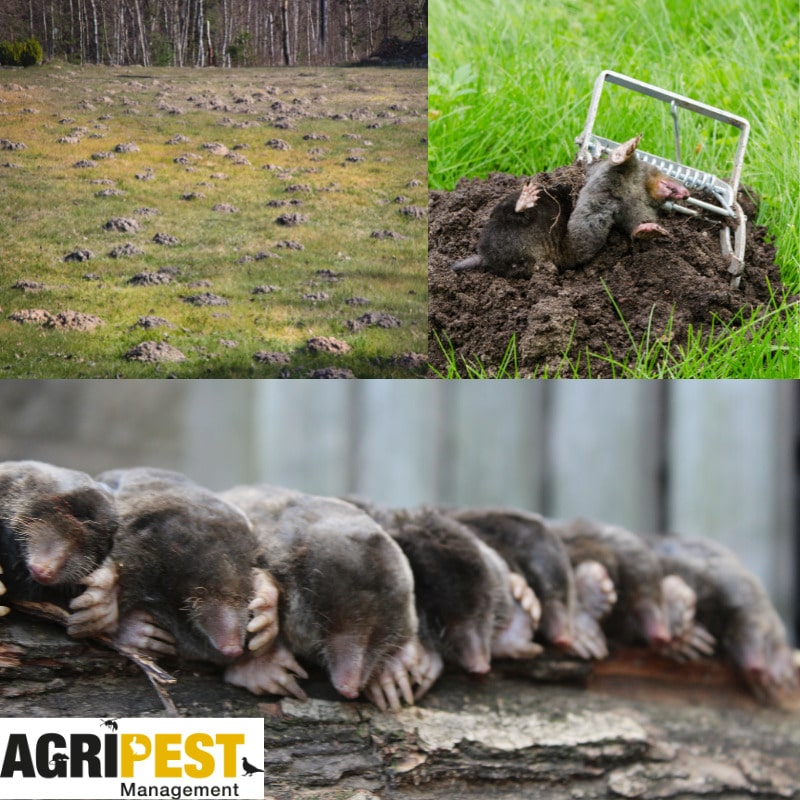
AgriPest carry out mole control in agricultural, domestic, commercial and estate/parkland settings, from small garden jobs to large scale mole clearance work. Recently we have been carrying out mole control on the estate, specifically in the parkland and garden areas where the moles had been making a mess of the well-kept grass. After a period of time where no mole control had been taking place, moles had re-established themselves in certain areas and therefore needed controlling.
We used both Talpex and Duffus traps with excellent results. We managed to clear the problem moles in just three visits, with a total of 18 moles trapped and removed from the estate.
Summary
Maintaining estates is incredibly important to develop a healthy natural environment. It is about keeping a balance within nature as too many of one animal can have a negative impact on another. Too many predators in one area can greatly reduce survival rates of other animals, but on the other hand, too little predators in an area could result in an overpopulation of animals due to high survival rates. This is why it is very important to have plans in place to keep the natural balance in an environment.
Pest management and country estates go hand in hand, and the professional management of wildlife is essential to ensure a healthy ecosystem is maintained. Although we are pest controllers, we also see ourselves as conservationists, we aren’t just out there to kill everything that moves as a lot of people perceive pest controllers to be. A lot of the work we do is to help certain species thrive in an environment where predators would have a detrimental impact on their survival rates. For example, during certain times of the year we will carry out corvid control on crows and magpies with the use of Larson and Ladder traps. This is done to protect the nests and chicks of rare species of vulnerable ground nesting birds such as Curlew, Lapwing and Plovers. The corvids can have a huge negative impact on these rare birds if they were to go unmanaged. By carrying out this corvid control we can help to minimize the number of eggs and chicks that are raided by the corvids and ensure that ground nesting birds can successfully breed and produce future generations.
Deer management is also important to ensure a healthy population of deer. Like most animals, deer can breed rapidly in an environment where they are not controlled. This can lead to unhealthy deer due to high competition for food i.e. too many deer in an environment that cannot sustain them with the natural resources that are within the area. Keeping the deer numbers well managed will ensure that the population is healthy with less competition for food. This also benefits the flora in the environment as it will not be overgrazed/over browsed or damaged the same as it would if there was a large number of deer within the area.
Too many deer in an area can also lead to vast amounts of damage to crops and saplings which has an obvious negative impact on peoples livelihoods. This is another reason why deer populations should be properly managed. We help to ensure a healthy population of deer by selectively culling certain animals such as sick or poor conditioned animals, or bucks with heads that could potentially injure other bucks during rutting activity.
Grey squirrel control is another aspect of pest management where we play a vital role in controlling the numbers. Grey squirrels are a non-native species whom have had huge negative impacts on our natural environment. They have reduced our native red squirrel numbers to the brink of extinction due to the fact that greys carry squirrel pox which is fatal to our native reds. Greys are nearly twice the size of red’s which means that they outcompete them in every way. Unfortunately red squirrels have been completely wiped out because of greys in our area, and you would have to drive for many hours to have the possibility of even seeing one in the wild. However that doesn’t mean that we can’t do our bit by controlling the numbers of non-native grey squirrels. The control of them also benefits our natural environment due to the damage they cause to our native woodland.
AgriPest are one of the only pest management companies with the knowledge and experience to manage such a wide variety of pest species across such vast areas of land. We are fully equipped to carry out effective and professional pest management over large areas, specialising in estate and agricultural pest management, whilst at the same time helping to maintain a healthy and balanced natural environment.
Contact us today
paul@agripestwestyorkshire.co.uk